
WBP vs MR Plywood: Which One Should You Choose?
When sourcing plywood, buyers usually compare wood species, panel thickness, or price. However, one specification has a significant impact on product performance but is often overlooked: the glue bond.
Terms like MR glue and WBP glue appear in quotations, technical data sheets, and product specifications every day. Yet many buyers are still unsure what they actually mean.
Some assume WBP simply means “waterproof plywood.” Others believe that any plywood made with WBP glue automatically qualifies as marine plywood.
Neither assumption is entirely correct.
In reality, the glue system affects where the product can be used, how well it withstands moisture, and how long it performs under demanding conditions.
This guide explains the difference between MR and WBP glue, the adhesive systems commonly used to achieve these bond performances, and how to choose the right option for your application.
Why Glue Type Matters
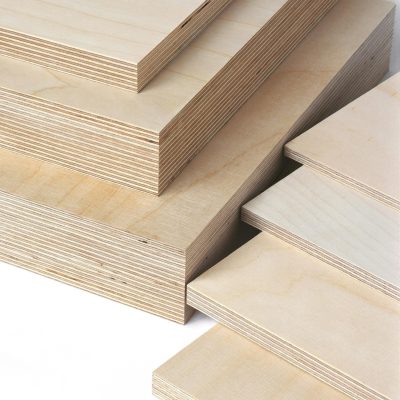
Plywood is manufactured by bonding multiple wood veneers together under heat and pressure using synthetic adhesives.
While wood species influences strength, density, and screw-holding performance, the adhesive determines how well the panel resists moisture, weather exposure, and long-term service conditions.
Selecting the wrong bonding system can lead to:
- Delamination after moisture exposure
- Reduced service life
- Higher maintenance and replacement costs
- Product failure in demanding environments
For importers, understanding the glue specification is just as important as choosing the right wood species.
What Are MR and WBP Glue?
Although buyers often refer to them as “glue types,” MR and WBP actually describe different levels of bond performance rather than the name of a specific adhesive.
Different resin systems can be used to achieve these performance requirements depending on the product, manufacturing process, and intended application.
MR (Moisture Resistant)
MR stands for Moisture Resistant.
MR plywood is commonly manufactured using urea-formaldehyde (UF) resin, an economical adhesive designed for interior applications where panels are protected from prolonged moisture exposure.
UF resin provides reliable bonding strength for dry indoor environments while offering excellent production efficiency.
MR grade is commonly used for:
- Furniture
- Cabinets
- Shelving
- Interior wall panels
- Decorative
Although it can tolerate occasional humidity, MR plywood is not designed for repeated wetting, outdoor exposure, or standing water.
WBP (Weather and Boil Proof)
WBP stands for Weather and Boil Proof.
Unlike MR, WBP does not refer to one particular adhesive. Instead, it describes a level of bond performance capable of resisting severe moisture exposure and boiling water tests.
Manufacturers typically achieve WBP performance using adhesive systems such as:
- Phenol-formaldehyde (PF)
- Melamine-urea-formaldehyde (MUF)
- Other exterior-grade resin systems
These adhesives provide significantly better resistance to:
- Rain
- High humidity
- Repeated wetting and drying
- Outdoor weather resistance
- Boiling water
Because of these characteristics, WBP bonding is commonly specified for:
- Film Faced Plywood
- Marine Plywood
- Exterior Panels
- Flooring Plywood
- Construction Panels
WBP vs MR: A Quick Comparison
| Feature | MR | WBP |
|---|---|---|
| Interior applications | ✔ | ✔ |
| Exterior applications | ✘ | ✔ |
| High humidity | Limited | Excellent |
| Boiling water resistance | ✘ | ✔ |
| Weather exposure | ✘ | ✔ |
| Typical service life in demanding environments | Lower | Higher |
| Relative cost | Lower | Higher |
While WBP plywood generally costs more, the improved durability often results in a lower cost over the product’s service life.
Which Glue Should You Choose?
The answer depends on how and where the plywood will be used, rather than simply choosing the strongest adhesive available.
Choose MR grade if:
- The panel will remain indoors.
- It is used for furniture or cabinetry.
- Moisture exposure is minimal.
- Cost efficiency is the primary consideration.
Choose WBP grade if:
- The panel will be exposed to rain or high humidity.
- Long-term durability is required.
- The application involves construction or infrastructure.
- The plywood will be used as Film Faced, Marine, or Flooring Plywood.
For demanding projects, investing in WBP bonding often reduces maintenance costs and extends the service life of the panel.
Common Applications
| Application | Recommended Bond |
|---|---|
| Indoor furniture | MR |
| Cabinets | MR |
| Interior decoration | MR |
| Film Faced Plywood | WBP |
| Marine Plywood | WBP |
| Flooring Plywood | WBP |
| Exterior construction | WBP |
Selecting the appropriate bonding system helps ensure the product performs as intended throughout its service life.
Common Misunderstandings
WBP Does Not Automatically Mean Marine Plywood
One of the most common misconceptions is that any WBP plywood is marine plywood.
In reality, marine plywood requires much more than a water-resistant bond.
A true marine panel is expected to combine:
- WBP bonding
- High-quality veneer
- Minimal or no core voids
- Consistent veneer construction
- Strict manufacturing quality control
The adhesive alone cannot determine whether plywood meets marine-grade requirements.
Glue Is Only One Part of Overall Quality
Even the best adhesive cannot compensate for poor manufacturing.
The long-term performance of plywood also depends on:
- Veneer quality
- Core construction
- Moisture content before pressing
- Glue spread consistency
- Hot pressing process
- Quality control during production
This is why experienced buyers evaluate the entire panel rather than focusing on glue type alone.
WBP Is a Performance Standard, Not an Adhesive Name
Many people use “phenolic glue” and “WBP glue” interchangeably.
Although phenol-formaldehyde resin is one of the most common adhesive systems used to achieve WBP performance, it is not the only option.
Different resin systems can satisfy WBP bonding requirements depending on product design and market specifications.
What Should Buyers Ask Their Supplier?
Instead of simply asking whether plywood uses MR or WBP glue, buyers should request supporting technical information.
A reliable supplier should be able to provide:
- Bonding test reports
- Third-party laboratory certification
- Information on the bonding standard achieved
- Details of the intended application
- Documentation covering the panel specification being ordered
Technical documentation provides far greater confidence than marketing claims alone.
Conclusion
Choosing between MR and WBP is not about selecting the “better” glue. It is about selecting the bonding system that matches the intended application.
MR grade offers an economical and reliable solution for interior environments where moisture exposure is limited.
WBP grade is designed for applications that demand greater resistance to water, weather, and long-term environmental exposure.
When evaluating plywood, buyers should look beyond the adhesive itself. Veneer quality, core construction, manufacturing consistency, and verified test documentation all contribute to the panel’s overall performance.
Understanding these factors will help importers choose product that delivers reliable performance while avoiding unnecessary costs or specification mismatches.
About AMC Vietnam
AMC Vietnam manufactures Film Faced, Marine, and Flooring Plywood for international markets.
Depending on project requirements, our products are available with MR or WBP bonding systems, FSC-certified materials, E1/E0 formaldehyde compliance, and supporting third-party test documentation to meet export requirements across Europe, North America, Japan, and other global markets.