
Birch Plywood vs Eucalyptus Plywood: Can Optimized Eucalyptus Be a Practical Alternative?
For decades, birch plywood has been regarded as one of the premium engineered wood panels on the market. Its attractive appearance, excellent machining properties, and consistent performance have made it a preferred choice for furniture, interior design, transportation, and high-end industrial applications.
However, the global plywood market is evolving. Rising raw material costs, tighter birch supply, and increasing demand for sustainable and cost-efficient solutions have encouraged manufacturers and buyers to explore alternative hardwood materials.
Among these alternatives, eucalyptus plywood has gained increasing attention. Thanks to advances in veneer processing, core construction, and manufacturing technology, optimized eucalyptus plywood is now able to meet the performance requirements of many construction and industrial applications while offering more stable raw material availability and a more competitive price.
The question today is no longer “Which wood species is better?” but rather “Which plywood is the right choice for this project?”
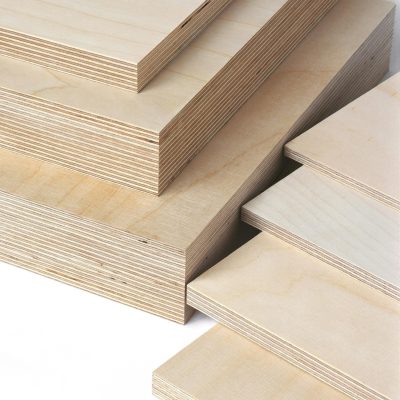
Why Birch Plywood Has Long Been the Industry Standard
Birch plywood has built its reputation over many years because of its excellent balance of strength, appearance, and dimensional stability.
It is particularly valued for:
- Uniform veneer quality
- Smooth and attractive surface
- Excellent screw-holding capability
- Stable machining performance
- High strength-to-weight ratio
These characteristics make birch plywood an excellent choice for furniture manufacturing, cabinetry, flooring, transportation, and architectural applications where appearance and machining quality are critical.
For premium decorative applications, birch plywood remains one of the industry’s preferred materials.
Why Buyers Are Exploring Alternatives
While birch plywood continues to perform exceptionally well, today’s purchasing decisions involve more than product performance alone.
International buyers are also considering factors such as:
- Raw material availability
- Supply chain stability
- Production lead time
- Cost efficiency
- Sustainable sourcing
In recent years, fluctuations in birch veneer supply and increasing raw material costs have encouraged many manufacturers to evaluate alternative hardwood species for applications where premium birch characteristics may not be essential.
Rather than replacing birch entirely, buyers are increasingly selecting different plywood solutions based on the technical requirements of each project.
The Advantages of Optimized Eucalyptus Plywood
Eucalyptus is one of the fastest-growing hardwood species used in commercial plywood production.
Unlike slow-growing hardwood resources, plantation-grown eucalyptus provides a stable and renewable source of raw material that supports large-scale manufacturing.
More importantly, the performance of eucalyptus plywood today is no longer determined by the wood species alone.
Modern manufacturing techniques—including veneer grading, moisture control, optimized core construction, precision hot pressing, and strict quality control—have significantly improved the consistency and mechanical performance of eucalyptus plywood.
When properly manufactured, eucalyptus plywood offers:
- High panel strength
- Good dimensional stability
- Consistent density
- Excellent performance for concrete formwork
- Reliable performance in many industrial applications
For projects where decorative appearance is not the primary concern, optimized eucalyptus plywood can provide an excellent balance between performance and overall project cost.
Birch Plywood vs Eucalyptus Plywood
| Feature | Birch Plywood | Optimized Eucalyptus Plywood |
|---|---|---|
| Appearance | Premium, uniform grain | Natural hardwood appearance |
| Machining Performance | Excellent | Very good |
| Mechanical Strength | Excellent | Very good for many structural applications |
| Concrete Formwork | Excellent | Excellent |
| Furniture Applications | Ideal for premium furniture | Suitable for selected furniture and industrial products |
| Raw Material Availability | More limited | Stable plantation supply |
| Cost Level | Premium | More competitive |
| Best For | Decorative and precision applications | Construction, formwork, industrial and value-driven projects |
It is important to note that birch plywood remains the preferred solution for many premium applications where appearance and precision machining are critical.
However, many construction and industrial projects do not require every premium characteristic offered by birch plywood.
In these cases, optimized eucalyptus plywood provides an attractive alternative that delivers the required technical performance while helping buyers better manage project costs and supply continuity.
How AMC VIETNAM Optimizes Eucalyptus Plywood
At AMC VIETNAM, we believe that high-performance plywood is created through manufacturing expertise rather than relying solely on wood species.
Over the years, we have continuously optimized our eucalyptus plywood production by improving:
- Veneer selection
- FSC certification
- Veneer drying
- Core construction
- Panel calibration
- Pressing technology
- Quality inspection throughout production
These improvements allow us to produce eucalyptus plywood with greater consistency, better mechanical performance, and improved durability compared with conventional eucalyptus plywood.
For customers seeking an alternative to premium birch plywood, our optimized eucalyptus plywood offers a practical solution that combines reliable performance with more competitive pricing and a stable raw material supply.
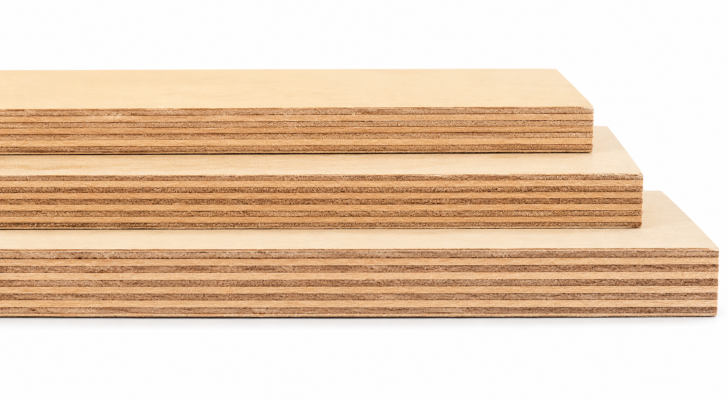
Choosing the Right Material for Your Project
There is no single plywood solution that fits every application.
If your project requires premium appearance, fine machining, and decorative performance, birch plywood remains an outstanding choice.
However, if your priority is achieving reliable structural performance, consistent quality, stable supply, and better overall project value, optimized eucalyptus plywood deserves serious consideration.
The best material is not necessarily the most expensive one—it is the one that meets your technical requirements while supporting your budget, supply chain, and long-term business goals.
Conclusion
The discussion is no longer about replacing birch plywood with eucalyptus plywood.
Instead, it is about selecting the right material for the right application.
As manufacturing technology continues to improve, optimized eucalyptus plywood is becoming an increasingly practical alternative for many construction and industrial projects. By combining stable plantation resources with advanced production techniques, manufacturers can deliver panels that meet demanding performance requirements while offering buyers greater flexibility in cost and supply.
For companies looking to balance performance, reliability, and value, optimized eucalyptus plywood represents an important opportunity in today’s evolving plywood market.