
How to Choose the Right Plywood Thickness for Different Applications
Choosing the right plywood thickness is more than selecting a number from a product catalogue.
A 12mm panel and an 18mm panel may both be high-quality plywood, but they can serve very different purposes. The right thickness depends on the application, expected load, support structure, machining requirements, dimensional stability and the performance required from the finished product.
For plywood buyers, understanding these differences can help avoid two common problems: selecting a panel that is not strong or stable enough for the application, or specifying a thicker panel than necessary.
This guide explains how common plywood thicknesses are used across furniture, engineered wood flooring, construction, concrete formwork and industrial applications, and what technical factors buyers should consider when specifying each one.
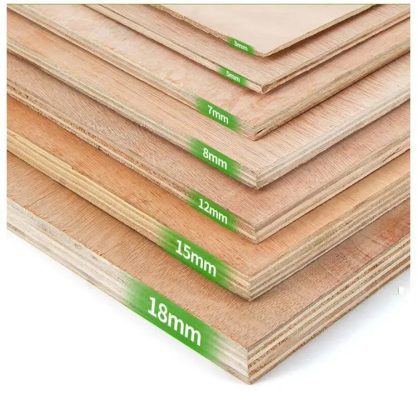
Why Plywood Thickness Matters
Thickness directly influences the stiffness and bending resistance of a plywood panel. However, thickness alone does not determine overall performance.
The final properties of plywood also depend on:
- Wood species
- Veneer quality
- Core construction
- Number and arrangement of veneer layers
- Glue type and bonding quality
- Density
- Moisture content
- Surface flatness
- Thickness tolerance
- Manufacturing consistency
This means that two panels with the same nominal thickness may perform differently if their construction and manufacturing quality are different.
For this reason, plywood should always be specified according to application and technical requirements, rather than thickness alone.
6–9mm Plywood: Lightweight Panels and Non-Load-Bearing Applications
Thin plywood is generally selected when weight, flexibility and ease of machining are more important than high load-bearing capacity.
Typical applications
- Furniture back panels
- Drawer bottoms
- Interior panels
- Wall and ceiling lining
- Lightweight packaging
- Decorative or laminated components
For furniture, 6mm plywood can be suitable for backs or other components that do not carry significant loads. Thinner plywood is also useful when manufacturers need to reduce component weight without requiring the structural stiffness of a thicker panel.
Technical requirements
For these applications, buyers should pay particular attention to:
- Flatness
- Surface quality
- Consistent thickness
- Core construction
- Cutting quality
- Moisture content
For thin plywood, thickness consistency becomes particularly important because even relatively small variations can become noticeable during assembly or lamination.
Where AMC can add value
AMC’s manufacturing process focuses on veneer selection, drying and panel construction to achieve consistent panel quality. Depending on the application, customers can specify different face materials, core materials and glue systems rather than selecting a standard panel based on thickness alone.
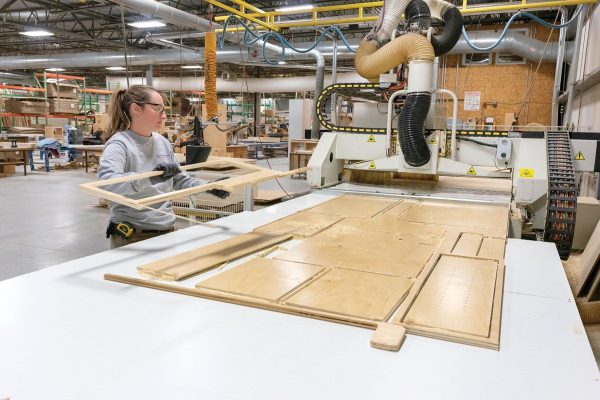
12–13mm Plywood: Engineered Wood Flooring and Versatile Panel Applications
The 12mm plywood range is particularly interesting because it serves several different markets.
One important application is engineered wood flooring.
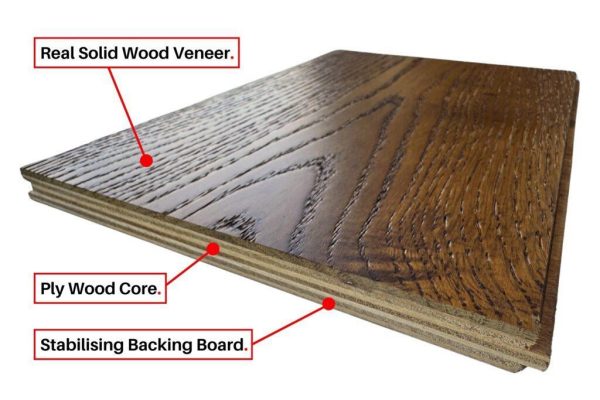
Plywood can be used as the structural substrate beneath a hardwood wear layer. In this application, the substrate needs to remain stable during pressing, machining, transportation and installation.
AMC specifically produces flooring plywood for engineered wood flooring, with available thicknesses including 12, 13, 15, 16, 18 and 19mm. AMC lists flatness and dimensional stability as key properties, with moisture below 10%, MOR of 30–50 N/mm² and MOE of 4,000–6,000 N/mm².
Typical applications
- Engineered wood flooring
- Furniture components
- Cabinet partitions
- Interior panels
- Selected industrial applications
Technical requirements for engineered flooring
For flooring plywood, buyers should pay particular attention to:
1. Thickness tolerance
The substrate needs to maintain a consistent thickness across the panel to support stable bonding and machining.
2. Dimensional stability
Changes in the plywood substrate can affect the finished flooring panel, particularly when a natural hardwood wear layer is bonded to the plywood.
3. Moisture content
Moisture needs to be controlled to reduce the risk of dimensional changes after the flooring is manufactured.
4. Bonding quality
The plywood must maintain reliable bonding under the conditions used during flooring production.
5. Surface flatness
A flat, uniform substrate is important for pressing, lamination, and subsequent machining.
AMC’s advantage
Flooring plywood is one area where AMC can offer more than simply a specific thickness.
AMC’s flooring plywood is designed specifically for engineered wood flooring and can be produced with Okoume, Eucalyptus, Canarium, Rubber, Bintangor and Vietnamese local wood faces, with eucalyptus and hardwood options for the core. Both MUF and phenol-formaldehyde glue systems are available depending on the application.
This allows the plywood construction to be adjusted according to the requirements of the flooring manufacturer.
15–16mm Plywood: A Balance Between Strength and Weight
15mm and 16mm plywood can provide a useful balance between panel stiffness, weight and material efficiency.
These thicknesses may be considered for applications where 12mm is not sufficient but a thicker 18–19mm panel is unnecessary.
Typical applications
- Furniture components
- Shelving
- Flooring
- Industrial panels
- Selected construction applications
- Engineered wood flooring
Technical requirements
The appropriate specification depends strongly on the application, but buyers should generally evaluate:
- MOR and MOE
- Density
- Thickness tolerance
- Core quality
- Screw-holding capability
- Moisture content
- Surface flatness
For furniture and industrial applications, machining quality also becomes increasingly important because panels may be cut, routed, drilled or CNC-machined after production.
AMC’s advantage
AMC can optimize veneer selection and core construction according to the intended use rather than treating all 15mm or 16mm plywood as the same product.
For flooring applications, AMC’s production range includes both 15mm and 16mm options, allowing manufacturers to select a substrate thickness based on the design of the finished flooring system.
18–19mm Plywood: Structural, Furniture and Heavy-Duty Applications
18mm plywood is one of the most widely specified thicknesses in plywood manufacturing.
It provides substantially greater stiffness than thinner panels and is commonly selected when the panel must carry higher loads or maintain rigidity over a larger unsupported area.
Typical applications
- Furniture carcasses
- Cabinets
- Shelving
- Tables and work surfaces
- Engineered wood flooring
- Concrete formwork
- Construction panels
- Industrial applications
For furniture, 18–19mm plywood is commonly used for major structural components such as cabinet sides, carcasses and shelves. Industry guides also commonly identify 18–19mm as a main structural thickness for furniture, while thinner panels are used for backs and lighter components.
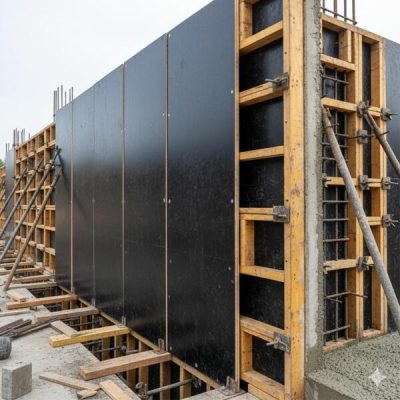
For concrete formwork, 18mm is also a common specification, but the required thickness should be determined together with panel span, support spacing, concrete pressure and the formwork system rather than selected solely from the thickness number.
Technical requirements
For demanding applications, buyers should look beyond thickness and request:
- MOR
- MOE
- Density
- Bonding quality
- Moisture content
- Thickness tolerance
- Core construction
- Surface quality
- Applicable standard or certification
For concrete formwork, additional considerations include:
- Phenolic film quality
- Edge sealing
- Water resistance
- Panel flatness
- Core gap control
- Reuse requirements
AMC’s advantage
AMC has extensive experience manufacturing 18–19mm plywood for different applications, including construction and flooring.
For flooring plywood, AMC’s published specification includes 18mm and 19mm options, with moisture below 10%, MOR of 30–50 N/mm² and MOE of 4,000–6,000 N/mm².
For construction applications, AMC can also adjust the plywood construction, core material, glue system and surface treatment according to the customer’s requirements.
How to Match Plywood Thickness with the Application
The following table provides a practical starting point for buyers:
| Plywood Thickness | Typical Applications | Key Requirements |
|---|---|---|
| 6–9mm | Back panels, drawer bottoms, interior panels, lightweight packaging | Flatness, thickness consistency, machining |
| 12–13mm | Engineered flooring, furniture components, partitions | Dimensional stability, moisture control, bonding |
| 15–16mm | Flooring, furniture, shelving, industrial panels | Strength, stiffness, flatness, core quality |
| 18–19mm | Furniture carcasses, flooring, formwork, construction, heavy-duty panels | Mechanical strength, bonding, thickness tolerance, stability |
These ranges should be treated as a starting point rather than a universal specification. The correct plywood thickness depends on the panel design, span, support structure, loading conditions and applicable technical standards.
Thickness Is Not the Same as Strength
One of the most important points for plywood buyers is that thicker does not automatically mean better.
For example, an 18mm plywood panel with poor core construction, weak bonding or inconsistent veneers may not perform as expected.
A properly engineered 15mm panel with appropriate veneer quality, core construction and bonding may be a better solution for an application that does not require 18mm.
This is why professional plywood specifications should consider the complete panel construction.
Before ordering, buyers should ask:
- What is the actual plywood thickness tolerance?
- What is the plywood density?
- What are the MOR and MOE values?
- What glue system is used?
- What is the moisture content?
- How is the core constructed?
- What face and back grades are available?
- Which standard or certification applies?
- Is the panel designed for the intended application?
How AMC Approaches Different Plywood Thicknesses
At AMC VIETNAM, thickness is not treated as an isolated specification.
The manufacturing process is adjusted according to the intended application, including:
Veneer selection → Veneer drying → Core construction → Lay-up → Pressing → Calibration → Sanding → Quality inspection
This approach allows AMC to control not only the final plywood thickness, but also the properties that determine how the panel performs in real applications.
For engineered wood flooring, this means focusing on flatness, dimensional stability, moisture and machining performance.
For furniture, the focus can shift toward surface quality, machining and screw-holding performance.
For construction and formwork, mechanical strength, bonding, water resistance and panel stability become more important.
The objective is not simply to manufacture a thicker panel.
It is to manufacture a plywood panel with the right combination of plywood thickness and performance for the application.
Final Thoughts
Choosing plywood thickness should always begin with the application.
A thin panel may be the right choice when weight and flexibility are important. A 12mm panel can provide a versatile solution for engineered wood flooring and other applications. 15–16mm panels can provide a balance between stiffness and weight, while 18–19mm plywood is commonly selected for applications requiring greater strength and rigidity.
But plywood thickness is only one part of the specification.
For buyers, the better question is not:
“What is the thickest plywood available?”
It is:
“What combination of thickness, construction and technical properties will give the best performance for my application?”
That is where the expertise of the plywood manufacturer becomes important.