
Why Core Quality Directly Affects Surface Quality in Plywood
Introduction
In plywood manufacturing, surface appearance is often the first factor buyers notice. Smooth surfaces, clean finishing, and uniform overlays are commonly associated with better plywood quality.
However, surface quality does not exist independently of the internal structure of the panel.
In reality, core quality directly affects surface stability, flatness, and long-term performance. A poorly constructed core may create visible surface defects such as unevenness, veneer telegraphing, waviness, or warping over time. Even when the surface initially appears acceptable, internal defects can gradually become more visible during use.
For professional plywood manufacturers, achieving stable surface quality starts with building a stable core structure.
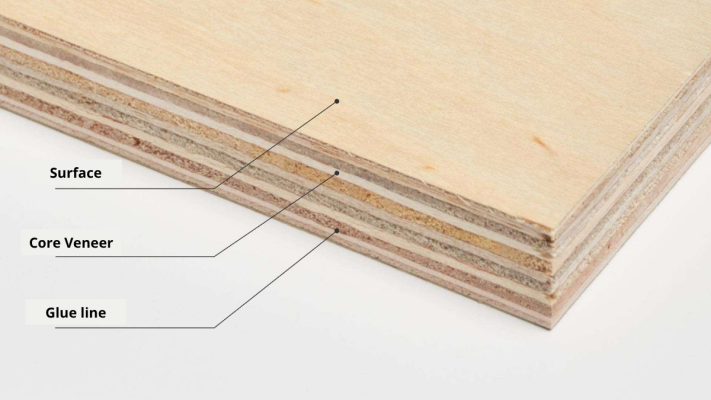
The Relationship Between Core Quality and Surface Quality
Plywood is a layered material, meaning the internal structure supports the entire panel surface.
If the core structure is inconsistent, the surface layer may also become unstable. Common internal problems, such as core gaps, veneer overlaps, or uneven density distribution, can eventually affect the visible appearance of the panel.
This relationship is especially important in film faced plywood and decorative plywood applications, where surface consistency is critical for both performance and appearance.
How Poor Core Quality Creates Surface Defects
Core Gaps and Surface Unevenness
Core gaps occur when spaces remain between veneer layers inside the plywood panel.
These empty areas reduce structural support beneath the surface veneer or film layer. As pressure is applied during pressing or during actual use, the unsupported areas may create:
- surface depressions
- localized unevenness
- instability across the panel surface
Over time, these defects may become more visible, particularly in applications exposed to moisture and repeated loading.
Veneer Telegraphing
One of the most common plywood surface issues is veneer telegraphing.
This happens when the joints, overlaps, or irregularities inside the core become visible through the surface veneer or film layer. Even with a smooth overlay, internal inconsistencies may gradually appear as visible lines or patterns on the panel surface.
Veneer telegraphing is more likely to occur when:
- core veneer thickness is inconsistent
- veneer joints are uneven
- panel density varies across the board
- pressing pressure is not uniform
Stable core construction helps reduce these surface irregularities.
Warping and Dimensional Instability
Poor moisture control inside the core can also affect final surface quality.
If veneer moisture content is inconsistent before pressing, panels may experience:
- warping
- twisting
- surface waviness
- dimensional instability
These issues not only affect appearance but may also reduce usability in construction and furniture applications.
Professional plywood manufacturers invest heavily in veneer drying and moisture control systems to maintain stable production conditions.
Why Fixing Surface Defects Often Increases Production Costs
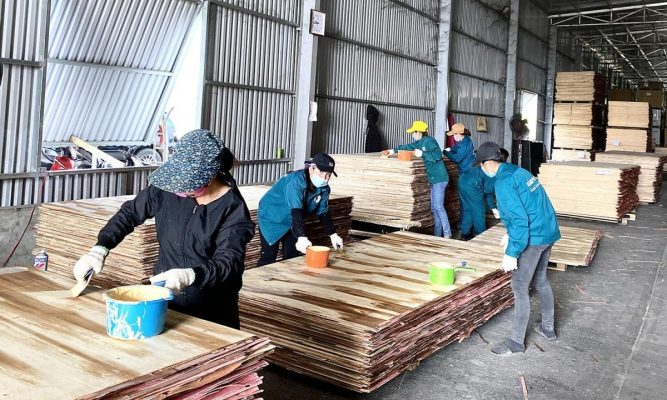
When core quality is poor, manufacturers often need additional processing to improve the final surface appearance.
This may include:
- patching and filling surface defects
- additional sanding processes
- thicker face veneers
- double overlay layers
- extra finishing treatments
While these methods may help improve appearance temporarily, they also increase production complexity and manufacturing costs.
In many cases, building a stable core structure from the beginning is a more efficient and reliable approach.
Good Core Quality Supports Better Surface Consistency
Panels with stable core construction generally provide:
- smoother surface finishing
- improved panel flatness
- reduced telegraphing risk
- more stable bonding performance
- better long-term durability
A high-quality core also allows the surface layer to remain more consistent over repeated use cycles.
This is especially important for film faced plywood used in concrete formwork applications, where repeated exposure to pressure and moisture can quickly reveal internal weaknesses.
The Role of Manufacturing Consistency
Consistent plywood quality depends heavily on stable manufacturing processes.
Professional plywood manufacturers typically focus on:
- careful veneer selection
- moisture-controlled veneer drying
- stable veneer lay-up
- accurate pressing parameters
- continuous quality inspection
Some manufacturers also use stitched core veneer techniques to improve core alignment and reduce internal gaps before pressing.
These production controls help improve both internal structure and final surface quality.
Surface Appearance Alone Does Not Define Plywood Quality
A smooth surface alone does not always indicate strong internal construction.
In some cases, additional finishing processes may temporarily hide internal defects, while the underlying core structure remains unstable.
For professional buyers, evaluating plywood quality requires considering both:
- surface appearance
- internal manufacturing quality
Long-term panel performance is often determined more by core stability than by surface finishing alone.
Sustainability and Long-Term Performance
As global buyers place greater emphasis on durability, consistency, and responsible sourcing, plywood manufacturers are increasingly expected to maintain stable production quality alongside sustainability standards.
Requirements related to FSC certification and international regulations such as EUDR are also becoming increasingly important in the global plywood industry.
Reliable plywood manufacturing today involves not only surface appearance, but also stable internal quality and responsible production practices.
Conclusion
In plywood manufacturing, surface quality is closely connected to core quality.
Internal defects such as core gaps, uneven density, or moisture imbalance can directly affect surface stability, flatness, and long-term durability. While additional finishing processes may help improve appearance, stable core construction remains the foundation of consistent plywood quality.
For demanding applications, understanding the relationship between core quality and surface quality can help buyers make more reliable purchasing decisions and achieve better long-term performance.