
How Veneer Moisture Control Affects Plywood Quality
Introduction
In plywood manufacturing, product quality depends heavily on process stability throughout production. While factors such as veneer grading, glue quality, and pressing parameters are important, veneer moisture control remains one of the most critical elements affecting final plywood performance.
Moisture content directly influences bonding strength, panel flatness, dimensional stability, and long-term durability. Even high-quality veneer materials may produce unstable plywood if moisture levels are not properly controlled before pressing.
For professional plywood manufacturers, veneer moisture control is not simply a technical detail. It is a fundamental part of ensuring consistent plywood quality.
Why Veneer Moisture Content Matters
Plywood is produced by bonding multiple veneer layers together under heat and pressure. For this bonding process to work effectively, veneer moisture content must remain within a controlled range.
If moisture levels vary significantly between veneer layers, the final panel may develop internal stress and structural instability.
Improper moisture control can lead to:
- weak glue bonding
- panel warping
- uneven pressing results
- surface waviness
- dimensional instability
These problems may not always appear immediately after production, but they often become more visible during transportation, storage, or repeated use.
The Relationship Between Moisture and Glue Bonding
Adhesive performance is highly sensitive to veneer moisture conditions.
When veneer moisture content is too high, excess water may interfere with glue curing during hot pressing. This can weaken bonding performance and increase the risk of delamination over time.
On the other hand, excessively dry veneer may absorb adhesive unevenly, creating inconsistent glue lines within the panel structure.
Stable moisture control helps improve:
- adhesive penetration
- bonding consistency
- panel integrity
- long-term durability
This is especially important for film faced plywood used in demanding construction environments.
How Moisture Imbalance Causes Warping
One of the most common plywood quality problems related to moisture is panel warping.
When veneer layers contain uneven moisture levels, the plywood panel may shrink or expand inconsistently after pressing. This creates internal stress that can gradually cause:
- bending
- twisting
- surface waviness
- dimensional instability
Warping not only affects panel appearance but may also reduce usability in construction, furniture, and flooring applications.
Professional plywood manufacturers, therefore, place strong emphasis on veneer drying and moisture balancing before assembly.
Moisture Control and Surface Quality
Veneer moisture conditions also affect final surface quality.
Inconsistent moisture distribution inside the core may lead to:
- uneven surface pressure during pressing
- veneer telegraphing
- surface irregularities
- unstable panel flatness
Even if the surface initially appears smooth, internal moisture imbalance may eventually create visible defects over time.
This is why stable core conditions are essential for achieving reliable surface quality in plywood manufacturing.
Veneer Drying and Production Stability
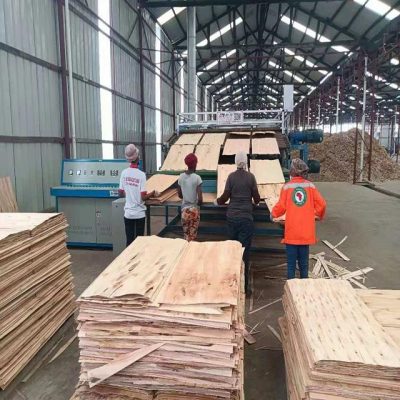
To improve production consistency, plywood manufacturers typically use veneer drying systems to reduce and stabilize moisture content before pressing.
Proper veneer drying helps:
- reduce internal stress
- improve glue bonding
- increase panel stability
- support consistent pressing conditions
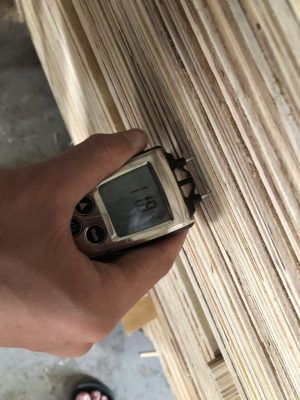
Moisture measurement and process control are important parts of maintaining stable production quality across batches.
Reliable plywood manufacturing depends not only on raw materials but also on stable process management throughout production.
Why Moisture Control Matters in Film Faced Plywood
Film faced plywood is commonly used in concrete formwork applications where panels are repeatedly exposed to moisture, pressure, and outdoor conditions.
Under these demanding environments, internal panel stability becomes extremely important.
Panels manufactured with better moisture control generally provide:
- improved dimensional stability
- more stable reuse performance
- reduced risk of delamination
- better long-term durability
This is one reason why moisture management plays a major role in professional film faced plywood manufacturing.
Moisture Control and Long-Term Value
Consistent plywood quality helps reduce operational problems and improve long-term value.
Panels with stable internal moisture conditions are less likely to develop performance issues during transportation, storage, or repeated use.
For importers, contractors, and distributors, this may help reduce:
- replacement frequency
- quality complaints
- material waste
- project delays
As a result, moisture-controlled plywood production often contributes to more reliable long-term performance and better cost efficiency.
Sustainability and Manufacturing Standards
As global buyers place greater emphasis on product consistency and responsible sourcing, plywood manufacturers are increasingly expected to maintain stable production quality alongside sustainability standards.
Requirements related to FSC certification and international regulations such as EUDR are also becoming increasingly important in the global plywood industry.
Modern plywood manufacturing therefore requires not only quality raw materials, but also controlled production processes that support stable and reliable performance.
Conclusion
In plywood manufacturing, veneer moisture control directly affects bonding quality, panel stability, surface consistency, and long-term durability.
Even high-quality raw materials may produce unstable panels if moisture conditions are not properly controlled before pressing.
For professional plywood manufacturers, stable moisture management is one of the key foundations of consistent plywood quality and reliable long-term performance.